Buying
How to buy property in Spain step by step
From budget and location through NIE, a lawyer and the reservation to signing at the notary: the whole buying process, timeline and the most common mistakes.
Updated November 26, 20265 min read
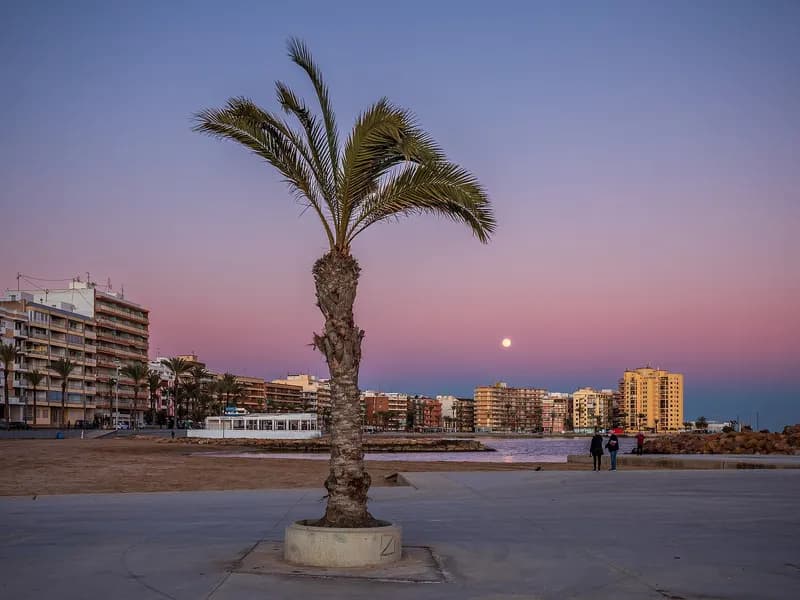
 Foto: Ximonic (Simo Räsänen), CC BY-SA 4.0
Buying property in Spain is fairly straightforward for EU citizens. You do not need any special permit, you can own the property in your own name and the whole process is well regulated by law. It still pays to know the steps in advance – you will save time, money and stress, and you will know which questions to ask. From reservation to signing at the notary it usually takes 6 to 12 weeks when paying with your own funds, a little longer with a mortgage.
1. Set your budget and choose a location
Start with a realistic budget. Add roughly 9 to 14% to the price for taxes and fees – the exact amount depends on the region and on whether you buy a new build or a resale property (see our article on hidden costs). If you plan to use a mortgage, Spanish banks usually lend non-residents 60 to 70% of the property value, so the rest and the purchase costs must come from your own funds.
Also decide what the property is for. For year-round living, look for a place where shops, doctors and services stay open in winter. For holidays and rentals, proximity to the beach and the airport matters, as does the possibility of a tourist licence. We compare the two coasts in our article Costa Blanca or Costa del Sol.
2. Choose a property and go and see it
Photos and a description never replace a viewing in person. We recommend planning a trip of a few days and seeing several properties and their surroundings: where you shop, how far the beach is on foot and what the area is like out of season. If you cannot travel, viewings can also be done by video call. Questions to ask:
- Are a parking space and storage room included, or sold separately?
- Which way do the windows and terrace face (sun in winter, shade in summer)?
- What are the annual community fees, IBI tax and utilities?
- Does the building have a lift and step-free access?
- If you plan to rent it out: does it have a tourist licence, or can one be obtained?
3. Get your NIE and open a bank account
The NIE (Número de Identidad de Extranjero) is the identification and tax number for foreigners. You need it to sign at the notary, to pay taxes and to set up utility contracts. You can get it from the police in Spain, at a Spanish consulate or through a lawyer with a power of attorney. The full procedure is in our article What is an NIE and how to get one.
You will need a Spanish bank account to pay taxes, community fees and utilities. Banks open accounts for foreigners routinely; have your passport, NIE and proof of the source of funds ready, which banks require under anti-money-laundering rules.
4. Find an independent lawyer
A lawyer (abogado) is the best investment of the whole process. They should be independent of the seller and the developer. They will check in particular:
- the land registry extract (nota simple) and whether there are any debts, charges or encumbrances on the property,
- whether the actual property matches the registry and the building permits,
- whether community fees and IBI tax are paid up,
- for a new build, the building licence and the bank guarantee covering the payments you make during construction.
Lawyers usually charge around 1% of the price plus VAT. With a power of attorney they can handle the NIE, bank account and notary signing for you, so you can complete the purchase remotely.
5. Reservation and private purchase contract
Once you agree a price with the seller, you sign a reservation agreement and pay a reservation fee, usually 3,000 to 6,000 EUR. The property is taken off the market for a few weeks while your lawyer completes the checks.
Next comes the private purchase contract (contrato de arras) with a deposit, usually 10% of the price. The most common type is arras penitenciales: if the buyer withdraws, they lose the deposit; if the seller withdraws, they must pay back double. For new builds under construction you pay stage payments instead, which the developer must secure with a bank guarantee.
6. Signing at the notary and handover
The deed of sale (escritura pública de compraventa) is signed at the notary. The notary verifies the identity of the parties and the registry status of the property. The rest of the price is paid by bank cheque or transfer at the signing, and you receive the keys straight away.
The notary then sends the deed to the land registry, where your ownership is recorded. What remains is paying the transfer tax (VAT and stamp duty for a new build), moving the electricity and water contracts to your name and registering with the community of owners. Your lawyer can take care of all of this.
Buying a new build?
For new builds still under construction, the process is slightly different. After the reservation you sign a contract directly with the developer and pay in stages – usually part on signing and further payments during construction. The rest is paid at the notary when the finished property is handed over. By law, the developer must secure every payment with a bank guarantee or insurance, so if the building is not completed you get your money back. Your lawyer therefore mainly checks the building licence, the guarantees and the completion date in the contract. Before handover it is a good idea to inspect the property and list any defects the developer must fix.
The most common mistakes
- Underestimating the purchase costs – allow 9 to 14% on top of the price.
- Buying without your own independent lawyer, relying only on the seller's assurances.
- Counting on rental income without a verified tourist licence.
- Deciding from photos alone, without seeing the area out of season.
Would you like some advice?
We will talk through your wishes, budget and the process. Free and without obligation.
FAQ
How long does the purchase take?
When paying with your own funds and with documents ready, usually 6 to 12 weeks from reservation to signing at the notary. Allow a few extra weeks with a mortgage.
Can I buy a property remotely?
Yes. With a power of attorney your lawyer can sign for you, although we recommend visiting the property and the area at least once.